
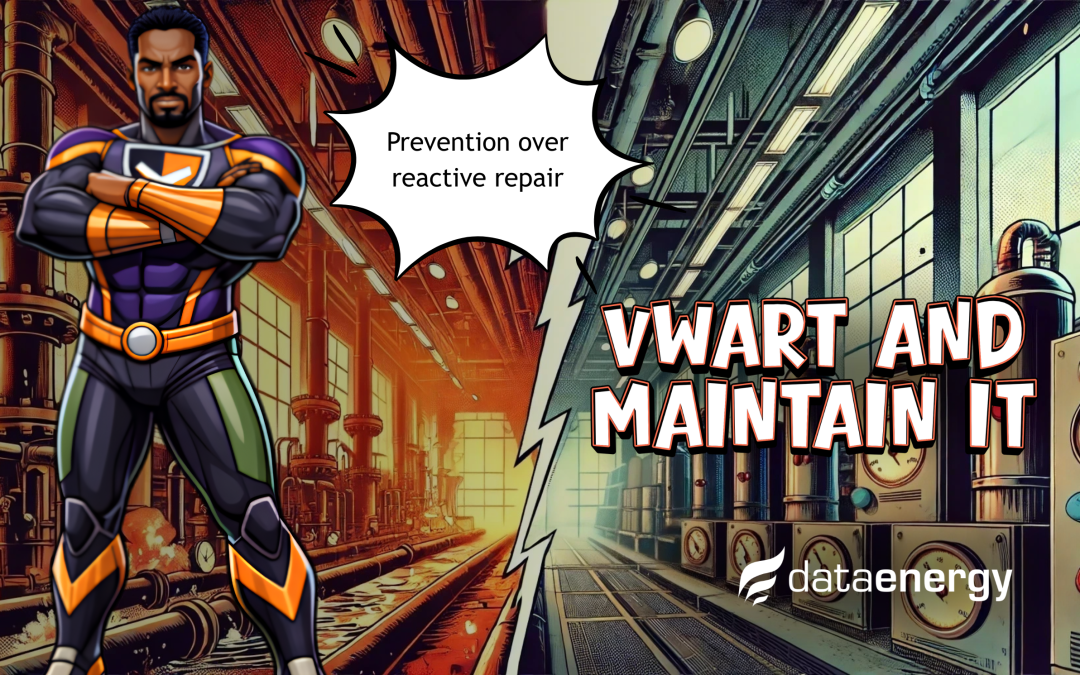
Maintain It champions preventative maintenance, helping operators spot small issues early so they can keep heat networks running efficiently and avoid costly reactive repairs.
He has a simple philosophy.
Don’t wait for something to break.
By the time a pump fails or a resident starts complaining, the warning signs have been there for months.
One of those warning signs is VWART.
Why return temperature matters
Maintain It likes to think of VWART as the network’s health check.
A healthy heat network extracts as much useful heat as possible before the water returns to the plant room.
The cooler that return temperatire is, the more efficiently the system is operating.
When return temperatures begin to rise, it’s often the first sign that something within the network isn’t performing quite as it should.
It doesn’t necessarily identify the exact fault, but it tells Maintain It where to start looking before the issue becomes more serious.
Small problems become big problems
Maintain It knows that major performance issues rarely appear overnight and issues could be varied.
It could be a poorly commissioned HIU, a passing control valve, a fouled plate heat exchanger or a system that’s drifted out of balance.
On their own, each issue may have only a small impact. But across dozens or even hundreds of dwellings, those inefficiencies quickly add up.
High return temperatures can lead to:
-
-
Increased fuel consumption
-
Higher pump energy costs
-
Reduced network capacity
-
Higher operating costs
-
For Maintain It, these are early warning signs that the network needs attention.
That’s why VWART is such a valuable maintenance tool.
It highlights that something isn’t right, giving operators the opportunity to investigate before performance deteriorates further.
Planned maintenance pays off
Maintain it has one simple rule: don’t wait until something breaks.
Regular servicing and inspections help keep return temperatures under control and networks operating efficiently.
Preventative maintenance can reduce energy waste, improve equipment lifespan, lower reactive maintenace costs and minimise resident complaints.
Better still, it helps operators spend their maintenace budgets more effectively by focusing attention where it’s needed most.
For Maintain it, VWART isn’t just another performance metric. It’s another tool that helps prevent tomorrow’s problems by identifying today’s opportunities for improvement.
Early intervention is the best prevention
VWART won’t fix a network.
But it helps Maintain It identify where attention is needed first, prompting a proactive approach.
Prevention is always better than reactive repair.
Stay ahead and make sure your maintenance is top level by contacting us here or visit our sister company DMG Delta to learn more about their maintenance services.